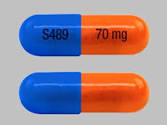
Warning! Doctors can sell your Rx history to Big Pharma

In yet another consumer-bashing move, the US Supreme Court ruled June 23, 2011, that pharmaceutical companies may now purchase lists of the drugs that individual doctors prescribe (without the name of the patient) for marketing purposes.

The ruling was made using the First Amendment Freedom of Speech argument that if researchers and journalist were allowed to gather such records, then marketers deserved equal access. Um, this doesn’t exactly seem like freedom of speech to me. It’s more like data mining. And that pretty much sucks.

Not only do the pharmaceutical companies not need to know what drugs our doctors are prescribing to us (even anonymously), they don’t need to be putting pressure on doctors to prescribe more of their particular drug.

What I hear from doctors is that they feel besieged by drug reps who pound them with expensive brochures, volumes of research and "educational" materials. There is unprecedented marketing influence over our most personal body mechanics. I, for one, don’t like it a bit.

One consumer advocate said that the ruling could create a conflict of interest for physicians who must fight to maintain the best interests of their patients while being bombarded or pressured by pharmaceutical companies.

Having come of age in an era when consumer protection was firmly entrenched in the culture (although I might have been naive about my trust), it’s still a shock to see just how little our individual needs influence the marketplace. And make no mistake, the medical field is a marketplace; has been for more than a decade. I hate it. I hope we can withstand the commercialization of our health. Even more, I hope we can survive it.

Warnings on generics: Supreme Court rules against consumers

I am outraged!

And more than a little scared.

This week, on Thursday, June 23, 2011, the US Supreme Court ruled 5-4 against two women who claimed that they were not properly warned about the risk of taking a generic equivalent drug, (http://www NULL.latimes NULL.com/health/boostershots/la-heb-generic-drugs-20110624,0,5484443 NULL.story)saying that consumers were not allowed to sue for side effects not listed on the label. The justices said the generics companies didn’t have the same responsibility as brand name pharmaceuticals to update their warning labels when new side effects were discovered.

Are you kidding me?

Those generic drugs, the ones pushed hard by insurance companies because they cost less, the only ones that some people can afford to take, are not even required to toe the same line for warning labels as Big Pharma?  Ridiculous. Absurd. And dangerous.

The two women, Gladys Mensing of Minnesota and Julie Demahy of Louisiana took a generic equivalent of Reglan (originally developed by Wyeth) to treat acid reflux for about four years and developed serious neurological symptoms (involuntary muscle movements). Although the Supreme Court did not dispute that the symptoms were side effects of the generic drug, it said that companies who manufacture generics should not be held to the same standards as research pharmaceutical firms to add new warnings to their labels. Their contention is that the original warning label is sufficient for a generic equivalent.

Justice Clarence Thomas wrote that the reason generics were granted special exemption was that "It is the special, and different, regulation of generic drugs that allowed the generic drug market to expand, bringing drugs more quickly and cheaply to the public."

But what about our safety and our right to full disclosure? Is the tradeoff for cheaper prescription prices an incomplete warning label about a potentially long-term, debilitating neurological condition? In this case, apparently so.

What does this mean for generic manufacturers? That they may skip merrily down the road producing medications that may or may not negatively impact the end user without telling us about newly-discovered problems.

What does this mean for ADD medications? It means "caveat emptor" – let the buyer beware. The drugs that are "off patent" may or may not have new, serious side effects. But if we take a generic we’ll never know, because there is no requirement that we be told about them. And now, no way to seek legal recourse against the company that produced the drug.

I am reminded of the severe warnings issued to cash-strapped consumers who ordered prescription drugs over the internet from foreign countries. There was no published warning of the purity or efficacy of the mail order drugs. Isn’t that exactly what is going on here? Granted, it is not a contamination or substitution problem, but we are buying (and taking) life-saving drugs without updated information about their potential for damage. So how can we know whether the generic we are taking is prone to cause problems that appeared after the original FDA approval? We can’t, thanks to the Supreme Court.

If Reglan was still under patent, Wyeth Pharmaceuticals (now part of Pfizer) would certainly be held responsible for warning the public about these serious side effects. But not the generic companies. This ruling allows generic drug manufacturers to hide the bad news from us. Until we experience them first hand.

Now I am even MORE outraged.

I will continue to request brand name prescriptions from my doctors. Thank goodness my health insurance still pays for them. My fingers are crossed that yours does, too. Which doesn’t mean those side effects on the label make me feel safer. But at least I know the possibilities.

Tell me about your prescriptions — do you take generics or not? Are you outraged too?

Neurotoxicity and meds

Buried in the fine print of an article in Wikipedia, I found some rather disturbing information.

A number of releasing agents, notably many of those derived from amphetamine (http://en NULL.wikipedia NULL.org/wiki/Amphetamine), have been found to be neurotoxic (http://en NULL.wikipedia NULL.org/wiki/Neurotoxic) to serotonin (http://en NULL.wikipedia NULL.org/wiki/Serotonin) and/or dopamine (http://en NULL.wikipedia NULL.org/wiki/Dopamine)neurons (http://en NULL.wikipedia NULL.org/wiki/Neurons) via damage to axons (http://en NULL.wikipedia NULL.org/wiki/Axon) and dendrites (http://en NULL.wikipedia NULL.org/wiki/Dendrite), enzymes (http://en NULL.wikipedia NULL.org/wiki/Enzyme), mitochondria (http://en NULL.wikipedia NULL.org/wiki/Mitochondria), DNA (http://en NULL.wikipedia NULL.org/wiki/DNA), plasmalemmal (http://en NULL.wikipedia NULL.org/wiki/Membrane_transport_protein) and vesicular transporters (http://en NULL.wikipedia NULL.org/wiki/Vesicular_transport_protein), and the cell membrane (http://en NULL.wikipedia NULL.org/wiki/Cell_membrane), ultimately causing cell death (http://en NULL.wikipedia NULL.org/wiki/Cell_death) or apoptosis (http://en NULL.wikipedia NULL.org/wiki/Apoptosis) as a result. Examples include amphetamine, methamphetamine (http://en NULL.wikipedia NULL.org/wiki/Methamphetamine), MDMA (http://en NULL.wikipedia NULL.org/wiki/Methylenedioxymethamphetamine), fenfluramine (http://en NULL.wikipedia NULL.org/wiki/Fenfluramine), and PCA (http://en NULL.wikipedia NULL.org/wiki/Parachloroamphetamine), among others.

What this says essentially is that amphetamines can damage neurons and cause cell death. But the piperidine compounds aren’t as  toxic – that’s Ritalin, Concerta and Daytrana:

In contrast, piperazine (http://en NULL.wikipedia NULL.org/wiki/Piperazine), aminoindane (http://en NULL.wikipedia NULL.org/wiki/Indane), and oxazoline (http://en NULL.wikipedia NULL.org/wiki/Oxazoline) releasing agents, as well as those from various other chemical families (http://en NULL.wikipedia NULL.org/wiki/Chemical_family), are considered to be either fully nontoxic (http://en NULL.wikipedia NULL.org/wiki/Toxicity), or significantly less toxic (http://en NULL.wikipedia NULL.org/wiki/Toxicity) in comparison.

Methylphenidate belongs to the piperidine (http://en NULL.wikipedia NULL.org/wiki/Piperidine) class of compounds and increases the levels of dopamine (http://en NULL.wikipedia NULL.org/wiki/Dopamine) and norepinephrine (http://en NULL.wikipedia NULL.org/wiki/Norepinephrine) in the brain through reuptake inhibition (http://en NULL.wikipedia NULL.org/wiki/Reuptake_inhibitor) of the monoamine transporters (http://en NULL.wikipedia NULL.org/wiki/Monoamine_transporter). It also increases the release of dopamine and norepinephrine. MPH possesses structural similarities to amphetamine (http://en NULL.wikipedia NULL.org/wiki/Amphetamine), and, though it is less potent, its pharmacological effects are even more closely related to those of cocaine (http://en NULL.wikipedia NULL.org/wiki/Cocaine).[1] (http://en NULL.wikipedia NULL.org/wiki/Methylphenidate#cite_note-0)[2] (http://en NULL.wikipedia NULL.org/wiki/Methylphenidate#cite_note-1)[3] (http://en NULL.wikipedia NULL.org/wiki/Methylphenidate#cite_note-2)

I’ve written here previously about Dr. Tracy Ware’s assertion that amphetamines aren’t such a good choice for our ADD brains, even if they do help our focus and concentration. And that Ritalin (methyphenadate) isn’t quite so bad. This article supports her opinion.

Darn it. Just when we found something that would at least wake up our brains a little, allow us to focus, the ultimate effect is negative. I sure don’t want cell death in my neurons. I think it’s back to caffeine for me. But in small doses so my heart doesn’t go pitty-pat in ways it shouldn’t.  (sigh)  Don’t you wish this was easier?

Depression delights

Maybe it was my husband’s near-fatal heart condition (http://lindaroggli NULL.blogspot NULL.com/2007/03/nailing-down-cloud NULL.html ) three years ago. Maybe it was the cease-and-desist order for GardenSpirit (my dream come true retreat house) (http://gardenspirit NULL.com) last year, which is forcing me to jump through extremely bureaucratic hoops (can you spell R-E-D T-A-P-E?). Maybe it was my parents moving into assisted living this week with virtually no notice. Maybe it was the failed project to redirect water away from my front yard that culminated in an ugly gash 4 feet wide and 200 feet long. Maybe was my dear Sheltie painfully hobbling toward an inevitable end. Maybe.
 
Or maybe, under a constant attack of stress, my brain reverted to its genetic predisposition. Depression.
 
Ugh. I really hate that word. And it seems to have descended on me despite my best efforts to 1) ignore it 2) pretend I was far too ‘healthy’ to fall victim to it and 3) work like a madwoman to outrun it. But thanks to my new psychiatrist, I am starting to view depression in a different light.
 
It is really unfortunate that we use the word ‘depression’ because it sounds like you are sad. That’s not what depression is,Dr. Ware (http://www NULL.chapelhillpa NULL.com/providers NULL.htm) told me yesterday. “It’s more like the frontal lobe of the brain goes dark.”
 
Frontal lobe? Hey, isn’t that an ADHD issue? Isn’t that all about executive function and planning and impulse control? Hmmm, could they possibly be related? Well yes. And no.
 
Depression isn’t ADHD. I was pretty angry when I found out I had ADHD because depression and ADHD in women are often confused. Even after I learned that ADHD often has a sidecar disorder along for the ride (like depression, bipolar, obsessive-compulsive), I was mad at all those doctors who had misdiagnosed me. I decided I’d probably never been depressed at all. It had been the ADHD all along, right?
 
Uh, probably not. Dr. Ware reminded me that signs of depression include lack of concentration, distractibility, trouble with focus. Huh. Sounds a lot like my good friends Inattention and Distraction, who pop up in a diagnosis of ADHD.
 
I suspect that for me, depression and ADHD take turns at the helm. One is in the driver’s seat while the other rides in the sidecar, then they switch places. Since it has been years since I was really depressed, I blithely decided that it would never return. Ever. WRONG.
 
Many of you wondered why I chose to stop taking my Adderall, especially when it had served me so well in the past. What I now realize is that the Adderall was keeping me afloat, squishing that depression into a corner so I could get something DONE (my favorite four letter word, remember?).
 
It was actually a miracle/stroke of genius/blessing that I stopped taking my Adderall because it peeled back the covers to reveal a more basic issue that I probably wouldn't have noticed otherwise. When Dr. Ware told me that  depression actually causes cell death in the brain (which is repairable, thank goodness) I suddenly understood why I’ve been struggling with even basic tasks (but embarrassed to admit it).
 
I have lots more to say about this but I know the ADD brain prefers short, sweet articles, so I’ll stop here for today. Stay tuned …
 
Oh, and my treatment plan includes being consistent with my antidepressant, fish oil, exercise and folic acid….tantalized???? Come back tomorrow for more….
 
(But first, tell me about your experience with depression…were you ever diagnosed with depression before your ADHD diagnosis? After? Talk to me!)

Three weeks without Adderall

OK, it's been three weeks since my last Adderall and I am reporting on the effects (or lack of them).

For the first few days, I found myself on autopilot, reaching for the pill case that contained my little blue "energy pills." But I steeled myself against taking them and let the ride wind down. I thought after a week, I'd evaluate my energy and focus, then decide whether to resume my meds…or not.

Well, Tracy Ware, the psychiatrist who spoke at the Meetup group (http://www NULL.meetup NULL.com/Triangle-Adult-ADHD/)two days after I stopped taking Adderall, scared the beejeezus out of me – her warnings about neurotoxicity seemed to be based in science. And I don't want fewer Dopamine receptor sites – I want MORE. Now the jury is still out on the overall effects of amphetamines, but why tempt fate?

Tracy told me privately that the Adderall would stay in my system for at least a month. A MONTH? She said that the second week would likely be worse than the first week. Hmmm .. this sounded a lot like detox, right? I didn't think of myself as an addict. Not ever. This was prescription medication. And I took only a tiny amount (max 2-3 pills a day of short acting 10 mg brand name Adderall).

But sure enough, the second week, I was draggy and had a hard time staying alert. Mostly, I was sleepy.

I found that if I got enough sleep at night (or with naps during the day), I was OK. But if I stayed up too late, got up too early or shorted my required 8 hours of sleep in some other way, I was blah. Just blah.

Couldn't get things done. Couldn't get motivated. Couldn't get going.

But here's the strange thing: I have been living in a mess in my bonus room/guest room for two years now. I am not proud of it. I am terribly embarrassed by it. But it's true.

Last week (third week off Adderall), I got the darned room cleaned up. Granted, I had motivation (my kids were coming to spend the weekend with darling little Lilly). And I had help (Erica the super organizer (http://www NULL.getalifeinc NULL.net/) came on Thursday morning and Janine the super housekeeper cleaned the rest of the house).

But I've had help before.
I've had motivation before.
But this is the first time I actually DID something about it.

Not only did we get the room cleaned, I bought a new bed, new curtains, new lamps and redecorated the room with a new duvet cover, pillows, mirrors and ceiling fan before they arrived! (Yes I had someone install the fan and hang the mirrors – is that cheating? Nope).

Point is that I am still tired/sleepy, but I seem to be getting things done anyway.
I am clearer about what I want and need done.
And I am pretty happy about it.

Is this an aberration?
Is it related to the absent Adderall?

Not a clue, have I.

But we're gonna find out.
In 10 days, I am going to go back on Adderall and monitor myself closely to see how I feel, what I accomplish and how my loved ones respond to the difference (if there is a difference).

In the meantime, I am taking more naps, trying to get to bed on time (what IS on time anyway?) and working in my garden for the first time in months.

Stimulating everybody’s brain?

Recently, I heard a doctor tell a TV audience that stimulants like Ritalin and Adderall improve focus for ANYBODY, not just people with Attention Deficit Hyperactivity Disorder. His point was that a positive response to stimulant medication is not proof of an ADHD diagnosis.

Wait a minute. When I first tried stimulants they put me to sleep! It was the first thing that convinced me that I really had ADHD. I'd heard that people with ADHD have a "paradoxical response" to medication, so if I was sleepy after I took Dextrostat, I must have an ADD brain.

I later learned that I had misinterpreted that information. Stimulants don't really have an opposite effect on ADHD brains. Instead, they realign the dance of specific neurotransmitters so the neurotransmitters can hit their mark in the neuron network. I fell asleep when I took Dextrostat (100% dextroamphetamine) because it was the wrong medication for my particular brain chemistry. Adderall (a combination of four different amphetamine salts including dextroamphetamine) worked wonders for me – no midday naps, much more focus.

The TV doctor was reacting to news that some college students swallow stimulant tablets before exams to improve their competitive edge. No word on whether the stimulants actually boosted the students' test scores, but the doctor implied that the groundswell of adult ADHD diagnoses was based more on requests for stimulants than legitimate medical testing.

This kind of pseudo-medical nonsense makes me mad. It took me a long, long time to believe that my ADHD diagnosis was accurate. Now I realized I was deeply  influenced by the skepticism of the media, the public and even the medical community about the legitimacy of ADHD. There was the pharmaceutical conspiracy theory: Big Pharma had concocted ADHD to boost their profitability. Adult ADHD was trivialized: only children could suffer from this silly little disorder so if you "still" have ADHD you must be immature. There was stigma attached to having something "wrong" with your brain: ADHD people are to be shunned or at least marginalized. No wonder I wanted nothing to do with any of it.

But here I am, broadcasting my ADHD story to anyone who stumbles across this blog. Obviously, I've come to terms with my ADHD. I know it's legit, that I am not a hypochondriac and that I certainly would never choose to take powerful medication if it wasn't necessary.

It's my responsibility – and yours, if you or someone you love has been diagnosed with ADHD – to combat the misinformation that masquerades as truth.

Do some of today's college students take stimulants before exams? You bet. Just like some college students took No-Dose when I was in college in the 1970s. And just like mega doses of caffeine, stimulants send those little neurotransmitters into hyperdrive in "normal" brains, creating frenzy instead of focus

Does it mean that adult ADHD is over-diagnosed? Nope. In fact, it is dramatically under-diagnosed; estimates show that only 10% of adults with ADHD are actually diagnosed and treated. Mark my words: in the next few years, we will see dramatic increase in the number of adults who are newly diagnosed with ADHD.

There will be a tipping point, a place at which an ADHD diagnosis carries no emotional baggage. It will merely be a condition to be treated, much like Type 1 diabetes or kidney disease. And then we can get on with the rest of our amazing and extraordinary lives.

Stimulating everybody's brain?

Recently, I heard a doctor tell a TV audience that stimulants like Ritalin and Adderall improve focus for ANYBODY, not just people with Attention Deficit Hyperactivity Disorder. His point was that a positive response to stimulant medication is not proof of an ADHD diagnosis.

Wait a minute. When I first tried stimulants they put me to sleep! It was the first thing that convinced me that I really had ADHD. I'd heard that people with ADHD have a "paradoxical response" to medication, so if I was sleepy after I took Dextrostat, I must have an ADD brain.

I later learned that I had misinterpreted that information. Stimulants don't really have an opposite effect on ADHD brains. Instead, they realign the dance of specific neurotransmitters so the neurotransmitters can hit their mark in the neuron network. I fell asleep when I took Dextrostat (100% dextroamphetamine) because it was the wrong medication for my particular brain chemistry. Adderall (a combination of four different amphetamine salts including dextroamphetamine) worked wonders for me – no midday naps, much more focus.

The TV doctor was reacting to news that some college students swallow stimulant tablets before exams to improve their competitive edge. No word on whether the stimulants actually boosted the students' test scores, but the doctor implied that the groundswell of adult ADHD diagnoses was based more on requests for stimulants than legitimate medical testing.

This kind of pseudo-medical nonsense makes me mad. It took me a long, long time to believe that my ADHD diagnosis was accurate. Now I realized I was deeply  influenced by the skepticism of the media, the public and even the medical community about the legitimacy of ADHD. There was the pharmaceutical conspiracy theory: Big Pharma had concocted ADHD to boost their profitability. Adult ADHD was trivialized: only children could suffer from this silly little disorder so if you "still" have ADHD you must be immature. There was stigma attached to having something "wrong" with your brain: ADHD people are to be shunned or at least marginalized. No wonder I wanted nothing to do with any of it.

But here I am, broadcasting my ADHD story to anyone who stumbles across this blog. Obviously, I've come to terms with my ADHD. I know it's legit, that I am not a hypochondriac and that I certainly would never choose to take powerful medication if it wasn't necessary.

It's my responsibility – and yours, if you or someone you love has been diagnosed with ADHD – to combat the misinformation that masquerades as truth.

Do some of today's college students take stimulants before exams? You bet. Just like some college students took No-Dose when I was in college in the 1970s. And just like mega doses of caffeine, stimulants send those little neurotransmitters into hyperdrive in "normal" brains, creating frenzy instead of focus

Does it mean that adult ADHD is over-diagnosed? Nope. In fact, it is dramatically under-diagnosed; estimates show that only 10% of adults with ADHD are actually diagnosed and treated. Mark my words: in the next few years, we will see dramatic increase in the number of adults who are newly diagnosed with ADHD.

There will be a tipping point, a place at which an ADHD diagnosis carries no emotional baggage. It will merely be a condition to be treated, much like Type 1 diabetes or kidney disease. And then we can get on with the rest of our amazing and extraordinary lives.

Adderall & Vitamin C interaction

I am working with a new psychiatrist (nothing wrong with the old one; Dr. W specializes in mid-life women with ADHD). She is running me through a trial of three new meds, none of which were on the market 15 years ago when I first tried on ADD meds  – gosh has it been that long ago?

It was a complete surprise to me to learn that stimulant medications have a distinct and negative interaction with foods that contain Vitamin C. Apparently the Vitamin C diminishes the effectiveness of the medication.*

Huh? I had NO idea this was true. I don’t know about you, but I want all the bang for my medication buck possible, so I’m gonna follow her suggestions (which she found on the package inserts of Adderall XR and Dexadrine Spansules – I need to get out my reading glasses to check that teeny tiny print more carefully).

Here’s the rule:

No foods with Vitamin C one hour before or after taking stimulants

Vitamin C big players on the food court include:

Oranges – juice or fruit
Grapefruit – juice or fruit
Strawberries
Papaya
Kiwi fruit
Mango
Cantaloupe
Lemons/lemonade
Limes/limeade

Potatoes (this is not a misprint)
Brussels sprouts
Broccoli
Kale
Cauliflower (who knew?)
Parsley
Mustard greens
Bell peppers
 

Other sneaky sources of Vitamin C

Coke/soft drinks/colas (!!!!)
Power bars
Fortified cereal
Power drinks
Granola bars
Pop Tarts
Any kind of jam or jelly made from fruits listed above

And of course…
Vitamins – multi-vitamins
Vitamin C tablets

 FYI
Dr. Wojdyska also nixes taking antibiotics in that two hour time span. And I found on the Adderall XR site that melatonin reacts with the medication, too. Insomniacs beware .. but only for that short time period.

(If you think taking an antacid like TUMS will allow you to eat citrus, you’re right, but note that *taking antacids INCREASES the effect of Adderall. Be careful out there….)

Thanks, Dr. W – you’re the best.

And now you know the rest of the label…

Hugs

Linda

*From the FDA site re: interactions with Adderall XR
Drug Interactions:
Acidifying agents -Gastrointestinal acidifying agents (guanethidine, reserpine, glutamic acid HCl, ascorbic acid, etc.) lower absorption of amphetamines.
Urinary acidifying agents -These agents (ammonium chloride, sodium acid phosphate, etc.) increase the concentration of the ionized species of the  amphetamine molecule, thereby increasing urinary excretion. Both groups of agents lower blood levels and efficacy of amphetamines.
Alkalinizing agents -Gastrointestinal alkalinizing agents (sodium bicarbonate, etc.) increase absorption of amphetamines. Co-administration of ADDERALL XR® and gastrointestinal alkalinizing agents, such as antacids, should be avoided. Urinary alkalinizing agents (acetazolamide, some thiazides) increase the concentration of the non-ionized species of the amphetamine molecule, thereby decreasing urinary excretion. Both groups of agents increase blood levels and therefore potentiate the actions of amphetamines.


Adderall & Vitamin C interaction

I am working with a new psychiatrist (nothing wrong with the old one; Dr. W specializes in mid-life women with ADHD). She is running me through a trial of three new meds, none of which were on the market 15 years ago when I first tried on ADD meds  – gosh has it been that long ago?

It was a complete surprise to me to learn that stimulant medications have a distinct and negative interaction with foods that contain Vitamin C. Apparently the Vitamin C diminishes the effectiveness of the medication.*

Huh? I had NO idea this was true. I don’t know about you, but I want all the bang for my medication buck possible, so I’m gonna follow her suggestions (which she found on the package inserts of Adderall XR and Dexadrine Spansules – I need to get out my reading glasses to check that teeny tiny print more carefully).

Here’s the rule:

No foods with Vitamin C one hour before or after taking stimulants

Vitamin C big players on the food court include:

Oranges – juice or fruit
Grapefruit – juice or fruit
Strawberries
Papaya
Kiwi fruit
Mango
Cantaloupe
Lemons/lemonade
Limes/limeade

Potatoes (this is not a misprint)
Brussels sprouts
Broccoli
Kale
Cauliflower (who knew?)
Parsley
Mustard greens
Bell peppers
 

Other sneaky sources of Vitamin C

Coke/soft drinks/colas (!!!!)
Power bars
Fortified cereal
Power drinks
Granola bars
Pop Tarts
Any kind of jam or jelly made from fruits listed above

And of course…
Vitamins – multi-vitamins
Vitamin C tablets

 FYI
Dr. Wojdyska also nixes taking antibiotics in that two hour time span. And I found on the Adderall XR site that melatonin reacts with the medication, too. Insomniacs beware .. but only for that short time period.

(If you think taking an antacid like TUMS will allow you to eat citrus, you’re right, but note that *taking antacids INCREASES the effect of Adderall. Be careful out there….)

Thanks, Dr. W – you’re the best.

And now you know the rest of the label…

Hugs

Linda

*From the FDA site re: interactions with Adderall XR
Drug Interactions:
Acidifying agents -Gastrointestinal acidifying agents (guanethidine, reserpine, glutamic acid HCl, ascorbic acid, etc.) lower absorption of amphetamines.
Urinary acidifying agents -These agents (ammonium chloride, sodium acid phosphate, etc.) increase the concentration of the ionized species of the  amphetamine molecule, thereby increasing urinary excretion. Both groups of agents lower blood levels and efficacy of amphetamines.
Alkalinizing agents -Gastrointestinal alkalinizing agents (sodium bicarbonate, etc.) increase absorption of amphetamines. Co-administration of ADDERALL XR® and gastrointestinal alkalinizing agents, such as antacids, should be avoided. Urinary alkalinizing agents (acetazolamide, some thiazides) increase the concentration of the non-ionized species of the amphetamine molecule, thereby decreasing urinary excretion. Both groups of agents increase blood levels and therefore potentiate the actions of amphetamines.