Warnings on generics: Supreme Court rules against consumers

I am outraged!

And more than a little scared.

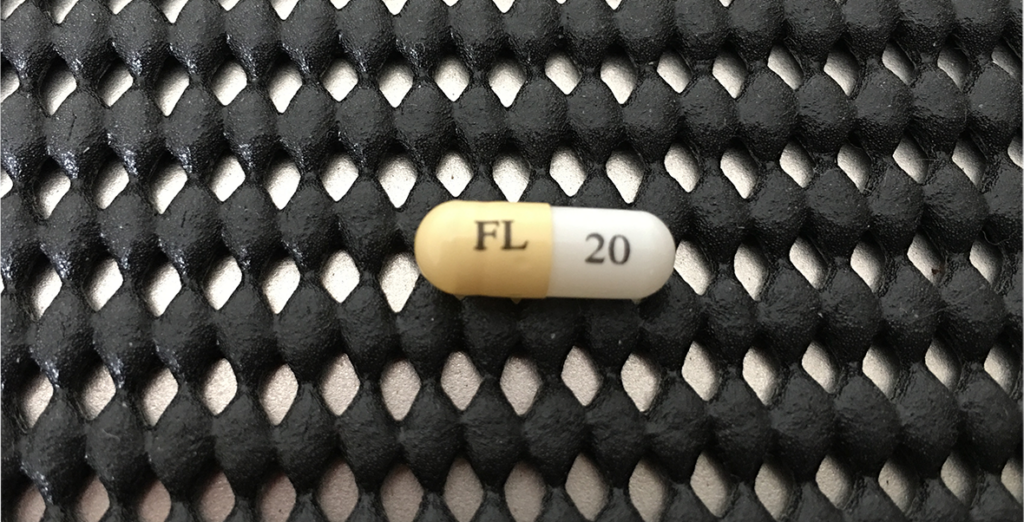
This week, on Thursday, June 23, 2011, the US Supreme Court ruled 5-4 against two women who claimed that they were not properly warned about the risk of taking a generic equivalent drug, (http://www NULL.latimes NULL.com/health/boostershots/la-heb-generic-drugs-20110624,0,5484443 NULL.story)saying that consumers were not allowed to sue for side effects not listed on the label. The justices said the generics companies didn’t have the same responsibility as brand name pharmaceuticals to update their warning labels when new side effects were discovered.

Are you kidding me?

Those generic drugs, the ones pushed hard by insurance companies because they cost less, the only ones that some people can afford to take, are not even required to toe the same line for warning labels as Big Pharma?  Ridiculous. Absurd. And dangerous.

The two women, Gladys Mensing of Minnesota and Julie Demahy of Louisiana took a generic equivalent of Reglan (originally developed by Wyeth) to treat acid reflux for about four years and developed serious neurological symptoms (involuntary muscle movements). Although the Supreme Court did not dispute that the symptoms were side effects of the generic drug, it said that companies who manufacture generics should not be held to the same standards as research pharmaceutical firms to add new warnings to their labels. Their contention is that the original warning label is sufficient for a generic equivalent.

Justice Clarence Thomas wrote that the reason generics were granted special exemption was that "It is the special, and different, regulation of generic drugs that allowed the generic drug market to expand, bringing drugs more quickly and cheaply to the public."

But what about our safety and our right to full disclosure? Is the tradeoff for cheaper prescription prices an incomplete warning label about a potentially long-term, debilitating neurological condition? In this case, apparently so.

What does this mean for generic manufacturers? That they may skip merrily down the road producing medications that may or may not negatively impact the end user without telling us about newly-discovered problems.

What does this mean for ADD medications? It means "caveat emptor" – let the buyer beware. The drugs that are "off patent" may or may not have new, serious side effects. But if we take a generic we’ll never know, because there is no requirement that we be told about them. And now, no way to seek legal recourse against the company that produced the drug.

I am reminded of the severe warnings issued to cash-strapped consumers who ordered prescription drugs over the internet from foreign countries. There was no published warning of the purity or efficacy of the mail order drugs. Isn’t that exactly what is going on here? Granted, it is not a contamination or substitution problem, but we are buying (and taking) life-saving drugs without updated information about their potential for damage. So how can we know whether the generic we are taking is prone to cause problems that appeared after the original FDA approval? We can’t, thanks to the Supreme Court.

If Reglan was still under patent, Wyeth Pharmaceuticals (now part of Pfizer) would certainly be held responsible for warning the public about these serious side effects. But not the generic companies. This ruling allows generic drug manufacturers to hide the bad news from us. Until we experience them first hand.

Now I am even MORE outraged.

I will continue to request brand name prescriptions from my doctors. Thank goodness my health insurance still pays for them. My fingers are crossed that yours does, too. Which doesn’t mean those side effects on the label make me feel safer. But at least I know the possibilities.

Tell me about your prescriptions — do you take generics or not? Are you outraged too?

Neurotoxicity and meds

Buried in the fine print of an article in Wikipedia, I found some rather disturbing information.

A number of releasing agents, notably many of those derived from amphetamine (http://en NULL.wikipedia NULL.org/wiki/Amphetamine), have been found to be neurotoxic (http://en NULL.wikipedia NULL.org/wiki/Neurotoxic) to serotonin (http://en NULL.wikipedia NULL.org/wiki/Serotonin) and/or dopamine (http://en NULL.wikipedia NULL.org/wiki/Dopamine)neurons (http://en NULL.wikipedia NULL.org/wiki/Neurons) via damage to axons (http://en NULL.wikipedia NULL.org/wiki/Axon) and dendrites (http://en NULL.wikipedia NULL.org/wiki/Dendrite), enzymes (http://en NULL.wikipedia NULL.org/wiki/Enzyme), mitochondria (http://en NULL.wikipedia NULL.org/wiki/Mitochondria), DNA (http://en NULL.wikipedia NULL.org/wiki/DNA), plasmalemmal (http://en NULL.wikipedia NULL.org/wiki/Membrane_transport_protein) and vesicular transporters (http://en NULL.wikipedia NULL.org/wiki/Vesicular_transport_protein), and the cell membrane (http://en NULL.wikipedia NULL.org/wiki/Cell_membrane), ultimately causing cell death (http://en NULL.wikipedia NULL.org/wiki/Cell_death) or apoptosis (http://en NULL.wikipedia NULL.org/wiki/Apoptosis) as a result. Examples include amphetamine, methamphetamine (http://en NULL.wikipedia NULL.org/wiki/Methamphetamine), MDMA (http://en NULL.wikipedia NULL.org/wiki/Methylenedioxymethamphetamine), fenfluramine (http://en NULL.wikipedia NULL.org/wiki/Fenfluramine), and PCA (http://en NULL.wikipedia NULL.org/wiki/Parachloroamphetamine), among others.

What this says essentially is that amphetamines can damage neurons and cause cell death. But the piperidine compounds aren’t as  toxic – that’s Ritalin, Concerta and Daytrana:

In contrast, piperazine (http://en NULL.wikipedia NULL.org/wiki/Piperazine), aminoindane (http://en NULL.wikipedia NULL.org/wiki/Indane), and oxazoline (http://en NULL.wikipedia NULL.org/wiki/Oxazoline) releasing agents, as well as those from various other chemical families (http://en NULL.wikipedia NULL.org/wiki/Chemical_family), are considered to be either fully nontoxic (http://en NULL.wikipedia NULL.org/wiki/Toxicity), or significantly less toxic (http://en NULL.wikipedia NULL.org/wiki/Toxicity) in comparison.

Methylphenidate belongs to the piperidine (http://en NULL.wikipedia NULL.org/wiki/Piperidine) class of compounds and increases the levels of dopamine (http://en NULL.wikipedia NULL.org/wiki/Dopamine) and norepinephrine (http://en NULL.wikipedia NULL.org/wiki/Norepinephrine) in the brain through reuptake inhibition (http://en NULL.wikipedia NULL.org/wiki/Reuptake_inhibitor) of the monoamine transporters (http://en NULL.wikipedia NULL.org/wiki/Monoamine_transporter). It also increases the release of dopamine and norepinephrine. MPH possesses structural similarities to amphetamine (http://en NULL.wikipedia NULL.org/wiki/Amphetamine), and, though it is less potent, its pharmacological effects are even more closely related to those of cocaine (http://en NULL.wikipedia NULL.org/wiki/Cocaine).[1] (http://en NULL.wikipedia NULL.org/wiki/Methylphenidate#cite_note-0)[2] (http://en NULL.wikipedia NULL.org/wiki/Methylphenidate#cite_note-1)[3] (http://en NULL.wikipedia NULL.org/wiki/Methylphenidate#cite_note-2)

I’ve written here previously about Dr. Tracy Ware’s assertion that amphetamines aren’t such a good choice for our ADD brains, even if they do help our focus and concentration. And that Ritalin (methyphenadate) isn’t quite so bad. This article supports her opinion.

Darn it. Just when we found something that would at least wake up our brains a little, allow us to focus, the ultimate effect is negative. I sure don’t want cell death in my neurons. I think it’s back to caffeine for me. But in small doses so my heart doesn’t go pitty-pat in ways it shouldn’t.  (sigh)  Don’t you wish this was easier?

“Focus Factor” on sale til 2/28/11

Hie thee to Costco (http://http//www NULL.costco NULL.com/Browse/Product NULL.aspx?Prodid=11507373&search=FOCUS%20FACTOR&topnav=&Mo=0&cm_re=1_en-_-Top_Left_Nav-_-Top_search&lang=en-US&Nr=P_CatalogName:BC&N=5000043&whse=BC&Dx=mode%20matchallpartial&Ntk=Text_Search&Dr=P_CatalogName:BC&Ne=4000000&D=FOCUS%20FACTOR&Ntt=FOCUS%20FACTOR&No=0&Nty=1&Ntx=mode%20matchallpartial) this month if you want to save some money on “Focus Factor, (http://www NULL.focusfactor NULL.com/?gclid=CMTc9My5nKcCFSVe7AodOGANbA)” a supplement that is supposed to  help attention and focus. Normally the price for 150 tablets is about $50 in drugstores but at Costco this month the price is $18 and some change. AND with a Costco coupon, you save an additional $4 per bottle! That means you can buy three bottles for less than the price of ONE bottle retail.

I’ve been taking “Focus Factor” since I went off my Adderall about 9 months ago. I struggled for months,  so I tried the generic knockoff of it (no longer manufactured) and found that it made me calmer and perhaps a little more focused. That’s good enough for me. After all, it’s just vitamins and I can always use a few more of those in my body.

You are supposed to take 4 pills a day, every day! That’s a bunch of money! So I was SO happy to see it at Costco (http://http://www NULL.costco NULL.com/Browse/Product NULL.aspx?Prodid=11507373&search=FOCUS%20FACTOR&topnav=&Mo=0&cm_re=1_en-_-Top_Left_Nav-_-Top_search&lang=en-US&Nr=P_CatalogName:BC&N=5000043&whse=BC&Dx=mode%20matchallpartial&Ntk=Text_Search&Dr=P_CatalogName:BC&Ne=4000000&D=FOCUS%20FACTOR&Ntt=FOCUS%20FACTOR&No=0&Nty=1&Ntx=mode%20matchallpartial) AND with the coupon, too (you can order it online without the coupon – but you do need a Costco membership).  The limit is four bottles, so I bought my limit and put three of them in the freezer for later.

Just thought you’d like to know.

Hugs

Linda

PS I am also taking 3000 units of fish oil as recommended by my psychiatrist — Nordic Naturals Ultimate Omega (http://www NULL.nordicnaturals NULL.com/en/Products/Product_Details/98/?ProdID=1428)which has extra potent strength. I take them with food (it’s an oil and needs food to be absorbed easily). Oh, and I keep them in the freezer, too (that’s what reminded me to tell you this!)

Finishing my book

I am writing.

Well, I am charged with writing my book, but instead I am writing a blog post.

We are at the beach and it's a gorgeous morning (after a series of awful, cold, windy and rainy mornings). "We" refers to me and the two Shelties that are doing a good job of distracting me from writing. Milli and Boomer are here because I knew I would worry about them if they were home. But they sure require a lot of my precious attention.

They are out wandering on the deck right now. I'm at the beach house that will be occupied by the ADDiva retreat women in October, I am living in it so I will know how we can best use it for the retreat. Already I am envisioning yoga at sunrise and meetings at the octagonal deck on the sand. It's a marvelous place to be.

But my book is going more slowly than I anticipated and I have a DEADLINE. OK, I will say it out loud: my book is going to be written, edited and printed by my birthday, April 29, 2011. OMG! Are you kidding me?

The more I write, the more I need to write. I worked with Judith Kohlberg for a weekend and she encouraged me to drop out a lot of stuff I thought was important ("You have other books to write. Save something for them," she told me). But I am adding that stuff back in. It IS important. And I want this book to be rich and full of tidbits and anecdotes about life in the non-linear lane.

Here I am sitting at my brought-from-home desk with adjustable tables all around me. It's an amazing view. I wish I had more time (don't I ALWAYS Wish I had more time?) but I promise you this: the book WILL be done. DONE, do you hear me? DONE. By my birthday.

So I'd better write…see you later..and keep WRITING!!

CogMed Day Two

It's Day Two and I cried, OK? I cried.

This CogMed computer stuff is so hard. I get so anxious that I am not "doing well" that I want to throw in the towel.

Huh? I am not the kind of person who gives up easily. Or am I? In the past, I have hung on far too long to lost causes, but give me two days of excruciating mental ping pong and I want to quit. It doesn't make sense.

Except that CogMed pushes my weaknesses front and center so I have to notice them. Hmmm. The very same weaknesses I have been hiding from the world (and perhaps myself) are now "public." The CogMed computers now know how nuanced my attention can be – here, not here. There, not there.

And with no prescription meds on board except Wellbutrin (my lifeblood), I am depending on fish oil, vitamins and FocusFacto (http://www NULL.focusfactor NULL.com/)r (which I am not sure has any effect at all).

So, the results of Day Two are (drum roll please):

I did better on the averages than yesterday, but some of my "best" scores dipped below the first day (the "easy" day). So I am feeling a little down. I made some stupid mistakes – whoops I never allow my clients to call themselves "stupid" so I guess they were "careless" mistakes. How's that for reframing?

I was mad at myself for missing some easy patterns and caught some lucky breaks when I guessed and got the right answer. Is my memory better than I think it is? Seems like I trusted my intuition but maybe it was a faint memory in disguise. Hmmmm. This will require more thought.

And there is tomorrow…Day Three. Oh.. I am traveling to Jacksonville tomorrow, so Day Three won't be until Tuesday. Stay tuned. I promise to write after each session. Uh, let's make that every other session. This could get boring. I can't stand boring.

CogMed – Take 2

About a year ago, in the interests of giving everything a try that purports to help ADHD, I plunked down my money (a lot of money actually – $1500) and set about trying CogMed, a computer-based memory training program. (http://cogmed NULL.com)

At the time, I was absolutely overwhelmed – more than usual overwhelm – and knew I wasn't going to be able to give the program the time and, um, attention, it needed. But I plunged in valiantly. The result was not so good. The exercises are difficult and get more difficult as the program progresses. That's by design – there is a computer somewhere in Europe that constantly monitors my efforts and scores. If I am doing well, it increases the difficulty. If I am floundering, it eases up a bit to let me get back in the groove.

But there's the rub – there IS no groove. Every time I start feeling confident, the doggone program ups the ante. It's maddening. And frustrating.

Embarrassingly, of all the people Dr. Tracy Ware has coached through CogMed, I was the ONLY person who didn't finish. A sad distinction, especially since I had a year to finish the program. I even stopped taking my Adderall, in part, because I'd heard that people did better on CogMed without meds.

To be fair to myself, CogMed is a PC program. I am a Mac person. I had a really old PC laptop that died this year. So it was a major headache to load the program and DO it. Tried to install Windows on my Mac and never did get it figured out (I am sure it's possible, I was just too overwhelmed with other stuff to make it work).  Then there was the question of time. My sessions lasted 90 minutes – sometimes longer. It took me a long time to buckle down my brain and force it to work in the way that CogMed demands. My head hurts remembering it.

So why in the world would I try it again? Because apparently it really makes a difference for ADDivas like me. Some of my best friends have had remarkable success with CogMed. They say the old patterns still had to be changed but thanks to the results of CogMed, new patterns were POSSIBLE.

I've always said that most of the advice given to ADHD folks is just the same old advice given to linear people. The only problem is that linear people can IMPLEMENT that advice. I recently was disheartened to hear a noted psychologist tell someone to "just DO it" – like we haven't tried that already! But if CogMed can help my brain actually conform to those linear standards a little better, then it might be worth another shot.

A few weeks ago, I plunked down more money (not quite as much, thankfully) and decided to give CogMed another try, especially in light of the buzz at CHADD this year that working memory is the key to ADHD problems and perhaps treatment.

I still had the disk from last year so I could start any time. Tracy sent me the new login but I let it languish for two weeks. I was at CHADD, the ADDA board retreat and I knew I wouldn't be able to start or sustain training in the midst of travel. So….this weekend, I blew the dust off the CD cover and popped it into my new PC laptop (I actually bought a laptop for CogMed  … and my Quickbooks files which suck on a Mac).

I was guardedly optimistic – I had some experience with this, after all, so perhaps it would be easier. Nope. The program still kicks my butt. I have no idea what my baseline working memory showed when I started yesterday but it couldn't have been good. I still stumbled, mostly on the spatial tasks that require chasing a series of lighted dots and reproducing the same pattern with my mouse. Ha. Good luck with that one.

This time, I have scheduled CogMed into my life five days a week. I am going to finish it, I swear. The research is too compelling NOT to jump into this again. And I will keep you posted right here. Deal? OK then. I'm going to talk about Day Two in a separate post.

Never forget anything again … ever!

OK, maybe that was a little too extreme. I get a little carried away with techno-bling that really works. And this smartpen WORKS.

It’s a fat-but-sleek ink pen that has a recorder (kinda cool), a microphone (pretty neat) and a camera (spectacular!) that will capture virtually everything you can write, draw, speak or dialogue with (OK,  I know it’s poor grammar, but I am too excited to correct it).

I received my Livescribe Pulse smart pen (http://www NULL.livescribe NULL.com/Smartpen/index NULL.html) last week but had no time to open it until Wednesday when I took it on a spin with a long-time client. As we talked, my Pulse recorded everything we both said AND it recorded the notes I took, too. With a camera. Under the pen “nib.” Really?

At the end of the session, I stopped the recording (by touching the pen to the “stop” command printed at the bottom of the page!!) and then turned back a couple of pages. I touched the end of the pen to a word I had written 10 minutes earlier and…..my voice flowed out of the pen with words I had used EXACTLY at the moment I wrote that word. WOW. OMG. This is big. This is HUGE.

The darned camera had actually recorded my scribbles and saved them! And thank goodness, had also saved the spoken words too. That’s a blessing considering that my ADDiva handwriting leaves something to be desired (my mother swears I was a doctor in another life, but actually my doctor-husband has to decipher my notes for me!),

I was even more amazed when I put the Livescribe pen in its special holster to connect it to my computer (via USB). Not only did the audio recording upload to the special Livescribe desktop software (for either Mac or PC), it uploaded my scribbles, too,

This is about as close to perfection as I’ve seen in the technology world. And the darned thing even creates a piano that you can play!!!!

The catch is that you MUST use the special computer imprinted paper to capture the words and audio (the paper is full of little dots that tell the computer where you have made a mark, etc). I was leery of proprietary notebooks, especially about price, but they aren’t too bad.

A four-pack of notebooks with 100 pages each is about $20..that’s about $5 each which isn’t terrible. Not cheap. Not wildly expensive. And you can use (should use) both sides of the page since the pages are numbered.

Here’s the website (http://www NULL.livescribe NULL.com/en-us/)– I thought you should know!

Hugs,

(Update since I bought my pen in March — there is a new version out named the Echo … even better and still the same price)

Great apps for iPad and iPhone

My iPad (http://www NULL.apple NULL.com/ipad/)has become my best friend – I take it everywhere I go (although I am a bit leery of the grocery store – afraid I might leave it in the cart). And since I was an "early adopter," there weren't millions of apps available when I received my iPad via FedEx back in May. That meant I could actually sort through the ones I'd like to try.

"Taska" (http://www NULL.bitalpha NULL.com/index NULL.html) is one of my favorites – it's a To Do list and project management app that has a simple, beautiful interface that I actually USE. Based on "Getting Things Done" or GTD principles, it has  "Inbox," "Action List,"  "Next," "Someday," and "Projects" lists. But it also has a Shopping List (sorely missing from apps like THINGS for Mac), which I love.

Even better, using my iPad's GPS (I have the 3G version which lets me roam and use the internet), it uses "Context" to show me where I am located in relation to the errands I am running. For instance, if I am supposed to go to the bank which is across town and to Lowe's (I spend a lot of time at Lowe's) which is two blocks away, Taska will tell me that, so I can be more efficient with time and gas. Cool, huh?

It syncs with the popular Toodledo app (http://www NULL.toodledo NULL.com/index NULL.php?ref=td495d4c8865423)when you use it on the iPhone. But for me, the iPhone is just too darned small to be practical. I can't see it well, my big fingers always hit the wrong keys on the keyboard and it's not as pretty (granted, I have an ancient iPhone…shockingly it's two years old!!!).

Anyway, wanted to let you know about Taska. I do a lot of research about this stuff and might as well pass along my findings to you, too!

Hugs

LInda


YOUR truth about stimulants

Should you stop taking your Adderall or Vyvanse or Dexadrine now that you've heard Dr. Tracy Ware's presentation (http://store NULL.lindaroggli NULL.com/product_p/d-the%20truth%20about%20stimulants NULL.htm) about the potential dangers of amphetamines? Maybe yes. Maybe no.

I just got off the phone with a woman (let's call her "Maggie") who recently started taking Vyvanse with great success. No side effects and improved attention, etc. After she listened to Tracy's presentation, she was unnerved by the possibility of brain damage with amphetamines so she switched medications (to a second tier ADHD drug). Maggie's been in a downward spiral ever since. Missed appointments, foggy brain, battered self esteem. Nothing we aspire to, right?

So why didn't she immediately stop the new meds and go back to Vyvanse? I suspect she called me for a reality check on whether I believed amphetamines really killed off brain cells. And I do. I told Maggie that many medications have potentially serious consequences: high blood pressure medication can cause sexual problems (http://www NULL.mayoclinic NULL.com/health/high-blood-pressure-and-sex/HI00091) for men. The FDA reported today that taking a malaria drug could cause severe kidney damage (http://drugstorenews NULL.com/story NULL.aspx?id=146043&menuid=335)and heart failure. There are unintended consequences to almost every choice we make.

But also I told her that returning to Vyvanse sounded like a good idea. I'm not a medical doctor so my opinion is worth about what you pay for it – $0. But it makes eminent sense to me to stick with something that works versus flailing around trying to save your brain cells. And yes, I DO understand that salvaging brain cells is an important goal, but the jury is still out on whether those cells will regenerate or not. There is a LOT we don't know yet about the brain and how it repairs itself.

Even more important, there is a quality of life issue here.  We ADD women have been through a lot of stuff (OK, sh**t) in our lives. Finding a medication that actually works to bolster our time management, organization, sense of well being, is a godsend.

We shouldn't stop exercising because we might pull a hamstring or sprain an ankle. And we shouldn't stop taking our amphetamine medication because someone told us there is potential for cell death. For heavens sake do NOT stop taking medication without telling your doctor! Those consequences could be even more dire than continuing the meds!

Anyway, Dr. Ware doesn't shun amphetamines; she prescribes them for her patients who need them. That includes those of us who don't see much improvement with Ritalin-family meds (like Tracy's own husband!).

The fact that I stopped taking my Adderall was more about looking at the factors that were causing me to feel out of control and a bit crazed. Sure there is a lot going on in my life. There is ALWAYS a lot going on in my life. And changing one thing at a time, to see the effects, is the way I can narrow down the cause of the problem, and then find my way back to a solution.

I don't know about you, but I want to feel alive every day. I want to feel good about myself and productive. I want to feel proud of myself and I'd like the people I love to be proud of me, too. It's not too much to ask of an ADD life. I know. I've lived it. And I'm going back there.

That means I will probably go back to Adderall. Not sure yet. Working on it. But if I do return to amphetamine medication, it will be MY truth about stimulants. Not Tracy's. Not Maggie's (Vyvanse is awful for me, BTW). Not Susan's or Ellen's or Mary's. Mine.

You need to find YOUR truth about stimulant medication. Yes. No. Maybe. Sometimes. Alternatives. Rotating. It's all part of the mix. If there is one thing I have learned about ADHD it's that it is literally a different experience for everyone. Personalized treatment..that's where we're headed, according to another psychiatrist who visited our Meetup group last night.

Work with your doctor, monitor your symptoms, get reaction from your loved ones. Find your OWN truth and then, make peace with it. None of us are gonna get out of this alive. Something, somewhere, sometime when we least expect it and probably don't want it, will cause our bodies to shut down and we'll bid farewell to the mortal coil.

So how do you want to live your life in the meantime? At my retreats I always read a poem by Mary Oliver (http://www NULL.loc NULL.gov/poetry/180/133 NULL.html)that ends with this line: "Tell me, what is you plan to do with your one wild and precious life?"

You alone have the answer. For all of it.

Depression delights

Maybe it was my husband’s near-fatal heart condition (http://lindaroggli NULL.blogspot NULL.com/2007/03/nailing-down-cloud NULL.html ) three years ago. Maybe it was the cease-and-desist order for GardenSpirit (my dream come true retreat house) (http://gardenspirit NULL.com) last year, which is forcing me to jump through extremely bureaucratic hoops (can you spell R-E-D T-A-P-E?). Maybe it was my parents moving into assisted living this week with virtually no notice. Maybe it was the failed project to redirect water away from my front yard that culminated in an ugly gash 4 feet wide and 200 feet long. Maybe was my dear Sheltie painfully hobbling toward an inevitable end. Maybe.
 
Or maybe, under a constant attack of stress, my brain reverted to its genetic predisposition. Depression.
 
Ugh. I really hate that word. And it seems to have descended on me despite my best efforts to 1) ignore it 2) pretend I was far too ‘healthy’ to fall victim to it and 3) work like a madwoman to outrun it. But thanks to my new psychiatrist, I am starting to view depression in a different light.
 
It is really unfortunate that we use the word ‘depression’ because it sounds like you are sad. That’s not what depression is,Dr. Ware (http://www NULL.chapelhillpa NULL.com/providers NULL.htm) told me yesterday. “It’s more like the frontal lobe of the brain goes dark.”
 
Frontal lobe? Hey, isn’t that an ADHD issue? Isn’t that all about executive function and planning and impulse control? Hmmm, could they possibly be related? Well yes. And no.
 
Depression isn’t ADHD. I was pretty angry when I found out I had ADHD because depression and ADHD in women are often confused. Even after I learned that ADHD often has a sidecar disorder along for the ride (like depression, bipolar, obsessive-compulsive), I was mad at all those doctors who had misdiagnosed me. I decided I’d probably never been depressed at all. It had been the ADHD all along, right?
 
Uh, probably not. Dr. Ware reminded me that signs of depression include lack of concentration, distractibility, trouble with focus. Huh. Sounds a lot like my good friends Inattention and Distraction, who pop up in a diagnosis of ADHD.
 
I suspect that for me, depression and ADHD take turns at the helm. One is in the driver’s seat while the other rides in the sidecar, then they switch places. Since it has been years since I was really depressed, I blithely decided that it would never return. Ever. WRONG.
 
Many of you wondered why I chose to stop taking my Adderall, especially when it had served me so well in the past. What I now realize is that the Adderall was keeping me afloat, squishing that depression into a corner so I could get something DONE (my favorite four letter word, remember?).
 
It was actually a miracle/stroke of genius/blessing that I stopped taking my Adderall because it peeled back the covers to reveal a more basic issue that I probably wouldn't have noticed otherwise. When Dr. Ware told me that  depression actually causes cell death in the brain (which is repairable, thank goodness) I suddenly understood why I’ve been struggling with even basic tasks (but embarrassed to admit it).
 
I have lots more to say about this but I know the ADD brain prefers short, sweet articles, so I’ll stop here for today. Stay tuned …
 
Oh, and my treatment plan includes being consistent with my antidepressant, fish oil, exercise and folic acid….tantalized???? Come back tomorrow for more….
 
(But first, tell me about your experience with depression…were you ever diagnosed with depression before your ADHD diagnosis? After? Talk to me!)